
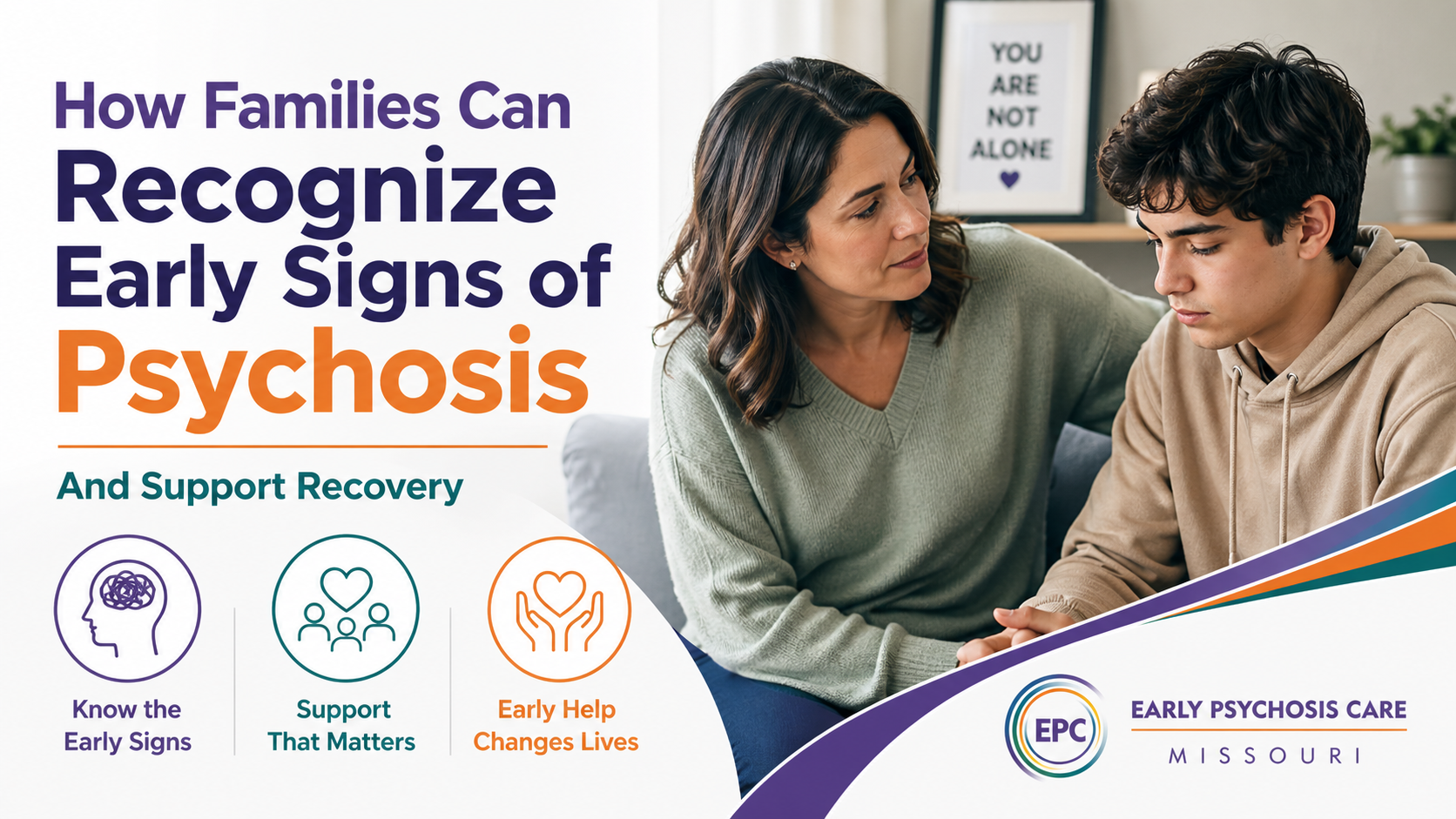
When early psychosis begins, it can be confusing and even frightening, not just for the individual experiencing it, but also for their family. The early signs are often subtle and can look similar to normal teenage behavior, which makes it difficult to identify what is really happening.
However, recognizing these signs early and seeking support can make a significant difference in long-term recovery.
What Is Early Psychosis?
Early psychosis, often referred to as a first episode of psychosis, is the initial period when a person begins to experience symptoms such as unusual thoughts, perceptions, or behaviors.
This stage most commonly appears during the late teens to mid-20s, though it can happen earlier or later. At this point, individuals may not fully understand what they are experiencing, but they often feel that something is different or not quite right.
Why Early Detection Matters
Psychosis does not usually appear suddenly. In many cases, it develops gradually over months or even years. This early phase, sometimes called the “prodromal period,” includes small but noticeable changes that may increase over time.
Because of this slow progression, families sometimes look back and feel like they missed something. In reality, the signs can be difficult to distinguish from everyday challenges like stress, anxiety, or typical behavioral changes.
The key is not identifying one specific symptom, but noticing patterns or changes across different areas of a person’s life.
Early Signs to Watch For
Some early warning signs of psychosis may include:
Social withdrawal or isolation
Changes in sleep, eating habits, or personal hygiene
Unusual sensory experiences, such as hearing or seeing things others do not
Increased fear, anxiety, or reluctance to leave home
Difficulty focusing or expressing thoughts clearly
Noticeable personality or behavior changes
These signs can appear in different environments, such as at home, school, or work. When multiple changes happen at the same time or become more intense, it may be a sign to seek support.
How Families Can Help
Families play a critical role in early detection and recovery. Simply being aware and observant can help reduce the time between the onset of symptoms and receiving care.
Some helpful steps include:
Talking to others who interact with the individual, such as teachers or coaches, to see if they notice similar changes
Seeking guidance from mental health organizations or professionals
Considering early screening or evaluation if something feels concerning
Even if symptoms are mild or unclear, reaching out early can lead to better outcomes.
What Is Coordinated Specialty Care?
Coordinated specialty care is an evidence-based approach designed specifically for individuals experiencing early psychosis.
Rather than focusing on just one form of treatment, it provides a team-based support system that may include:
Therapy and counseling
Family support and education
Assistance with school or employment
Case management and ongoing guidance
This approach helps individuals not only manage symptoms, but also rebuild their daily lives and maintain their goals.
Recovery Is Possible
One of the most important messages for families to understand is that recovery is not only possible, it is expected.
With the right support, individuals experiencing early psychosis can:
Continue their education
Build meaningful relationships
Pursue careers
Live independently and with purpose
Early intervention plays a major role in making this possible, helping individuals move forward with confidence and stability.
Moving Forward
Recognizing early psychosis can feel overwhelming, but families do not have to navigate it alone. With awareness, early support, and the right care systems in place, recovery becomes a realistic and achievable path.
Programs like EPC Missouri continue to connect individuals and families with the resources they need, helping bridge the gap between uncertainty and long-term recovery.