
Early Psychosis Care Center Newsletter
Q3 2026
Understanding the Relationship Between Substance Use and Psychosis
Substance use and mental health often go hand in hand, especially during the teen and young adult years. This is a time when many mental health conditions first appear and when many people begin experimenting with alcohol or drugs. Today, many young people report using one or more substances, while rates of anxiety, depression, and thoughts of suicide remain high. Understanding how substance use and mental health affect each other is an important part of helping young people stay healthy.

One growing concern is the connection between substance use and psychosis. Psychosis is a condition that affects the way a person experiences reality. Someone experiencing psychosis may see or hear things that others don’t, believe things that aren’t true, or have trouble organizing their thoughts. Certain substances—including cannabis (marijuana), methamphetamine, cocaine, hallucinogens, and even large amounts of caffeine—can trigger these symptoms. Sometimes the symptoms go away after the substance leaves the body. In other cases, substance use may uncover or contribute to a longer-lasting mental health condition, especially in someone who is already at higher risk.
The relationship works both ways. Some people use alcohol or drugs to cope with stress, anxiety, depression, or confusing mental health symptoms. Unfortunately, substance use can make these problems worse. It can increase symptoms, make it harder to get an accurate diagnosis, interfere with treatment, and raise the risk of future mental health crises. For people experiencing psychosis for the first time, using substances is linked to more hospital visits, more severe symptoms, and greater difficulty staying engaged in treatment.
Cannabis deserves special attention because today’s products are often much stronger than they were in the past, and many young people believe it is harmless. While most people who use cannabis will never develop psychosis, research shows that frequent use, using high-potency products, and starting at a younger age can increase the risk for people who are already vulnerable. This is why it’s important for healthcare providers to ask about cannabis use when working with teens and young adults who are struggling with their mental health.
Infographic: Substance Use and Psychosis
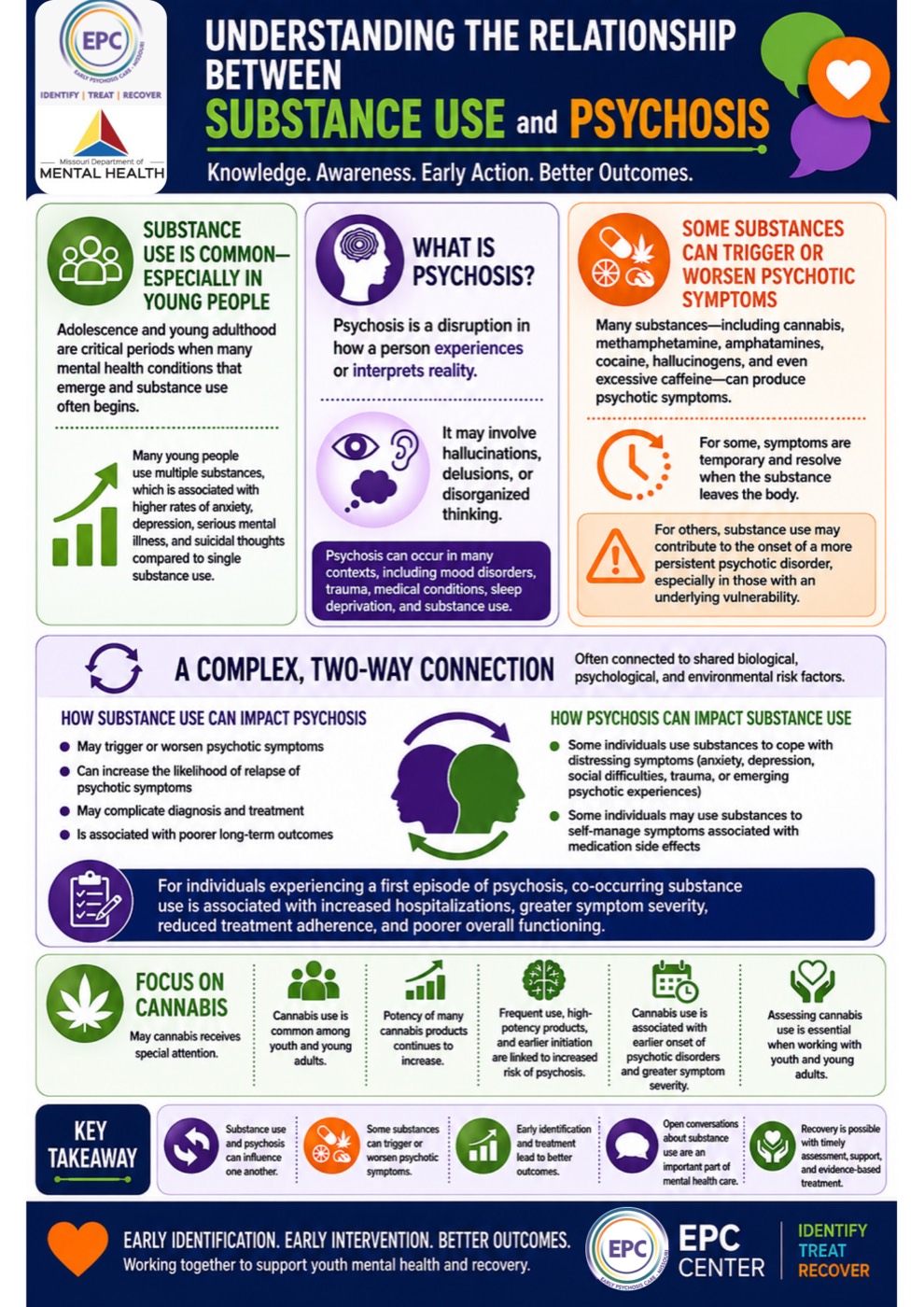
Understanding the Relationship Between Substance Use and Psychosis
Knowledge. Awareness. Early Action. Better Outcomes.
Substance use is common, especially in young people
- Adolescence and young adulthood are critical periods when many mental health conditions that emerge and substance use often begins.
- Many young people use multiple substances, which is associated with higher rates of anxiety, depression, serious mental illness, and suicidal thoughts compared to single substance use.
What is psychosis?
- Psychosis is a disruption in how a person experiences or interprets reality.
- It may involve hallucinations, delusions, or disorganized thinking.
- Psychosis can occur in many contexts, including mood disorders, trauma, medical conditions, sleep deprivation, and substance use.
Some substances can trigger or worsen psychotic symptoms
- Many substances, including cannabis, methamphetamine, amphetamines, cocaine, hallucinogens, and even excessive caffeine, can produce psychotic symptoms.
- For some, symptoms are temporary and resolve when the substance leaves the body.
- For others, substance use may contribute to the onset of a more persistent psychotic disorder, especially in those with an underlying vulnerability.
A complex, two-way connection
Often connected to shared biological, psychological, and environmental risk factors.
How substance use can impact psychosis:
- May trigger or worsen psychotic symptoms
- Can increase the likelihood of relapse of psychotic symptoms
- May complicate diagnosis and treatment
- Is associated with poorer long-term outcomes
How psychosis can impact substance use:
- Some individuals use substances to cope with distressing symptoms (anxiety, depression, social difficulties, trauma, or emerging psychotic experiences)
- Some individuals may use substances to self-manage symptoms associated with medication side effects
For individuals experiencing a first episode of psychosis, co-occurring substance use is associated with increased hospitalizations, greater symptom severity, reduced treatment adherence, and poorer overall functioning.
Focus on cannabis
- Cannabis use is common among youth and young adults.
- Potency of many cannabis products continues to increase.
- Frequent use, high-potency products, and earlier initiation are linked to increased risk of psychosis.
- Cannabis use is associated with earlier onset of psychotic disorders and greater symptom severity.
- Assessing cannabis use is essential when working with youth and young adults.
Key takeaway
- Substance use and psychosis can influence one another.
- Some substances can trigger or worsen psychotic symptoms.
- Early identification and treatment lead to better outcomes.
- Open conversations about substance use are an important part of mental health care.
- Recovery is possible with timely assessment, support, and evidence-based treatment.
Early identification. Early intervention. Better outcomes. Working together to support youth mental health and recovery.
Days to Honor
National Relaxation Day
August 15
World Suicide Prevention Day
September 10
World Mental Health Day
October 10
2026 Missouri Substance Use Prevention Conference
Date
October 28-29, 2026
Location
Wyndham Executive Center, Columbia, Missouri (in person)
Join us for our 2026 Missouri Substance Use Prevention Conference. The conference hosts more than 400 attendees from across the state each year. During the conference, you will have the opportunity to learn, network, and collaborate.
Suicide Prevention Month
Each September, Suicide Prevention Month serves as a reminder that suicide is preventable and that every person has a role in creating hope, reducing stigma, and connecting people to support. By learning the warning signs, understanding risk factors, and knowing how to respond, we can help save lives and strengthen our communities.
Why It Matters
Suicidal thoughts can affect anyone—regardless of age, gender, race, background, or profession. While suicide is often associated with depression or other mental health conditions, there is no single "look" or obvious indicator. Many individuals experiencing suicidal thoughts may hide their emotional pain, making awareness and compassionate conversations more important than ever.
Despite growing awareness of mental health, stigma continues to prevent many people from seeking help. Suicide Prevention Month encourages all of us to normalize conversations about mental health, promote hope, and ensure that people know they are not alone.
Suicide by the Numbers
- 49,449 people died by suicide in the United States in 2022.
- Approximately 123 people die by suicide every day in the U.S.
- Suicide remains one of the leading causes of death nationwide.
- It is the 2nd leading cause of death for individuals ages 25–34.
- It is the 3rd leading cause of death for youth and young adults ages 15–24.
- Men die by suicide at significantly higher rates than women, while women report more suicide attempts.
How You Can Help
- Ask directly if someone is thinking about suicide. Asking does not increase the risk—it opens the door for support.
- Listen without judgment and let them know they are not alone.
- Encourage professional help from a mental health provider or crisis service.
- Stay connected and follow up with the person after your conversation.
- Share resources and encourage others to learn about suicide prevention.
Remember
Hope matters. Compassion matters. Connection matters. Every conversation has the potential to make a difference. Together, we can reduce stigma, promote mental wellness, and help ensure that no one has to face life’s challenges alone.
Race Against Suicide
The Race Against Suicide is an annual 5K/10K hosted by the Missouri Suicide Prevention Network (MSPN) to raise awareness, honor lives lost, and inspire hope through connection and community.
Every step helps reduce stigma, promote suicide prevention, and remind others that they are never alone.
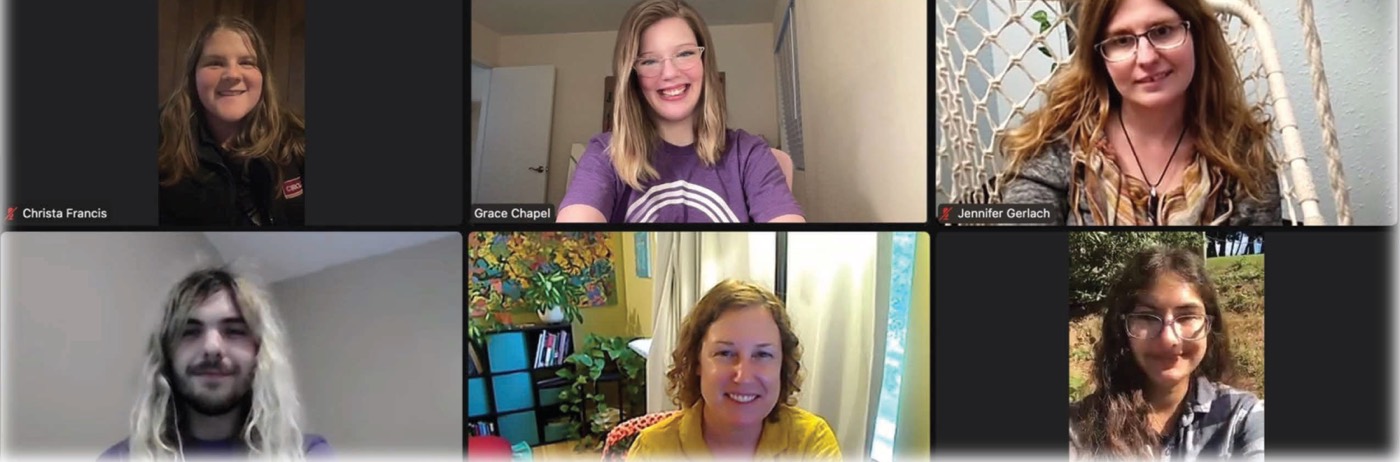

Join our Youth Advisory Council!
www.epcmissouri.org/youth-advisory-council/
Monthly virtual meetings
Second Monday of every month, 6-7pm CST

Allies and Supporters Council (ASC)
Has your loved one experienced psychosis or other serious mental illness? The Early Psychosis Care Center wants to hear about your experiences.
Why Join?
Influence Change
Your experiences can encourage others to reach out for support and services.
Empower Others
Improved education has the potential to lessen stigma and increase rates of recovery.
Build Connections
Learn and gain new perspectives from members of the mental health field. Psychosis does not have to be isolating.
Upcoming Trainings