
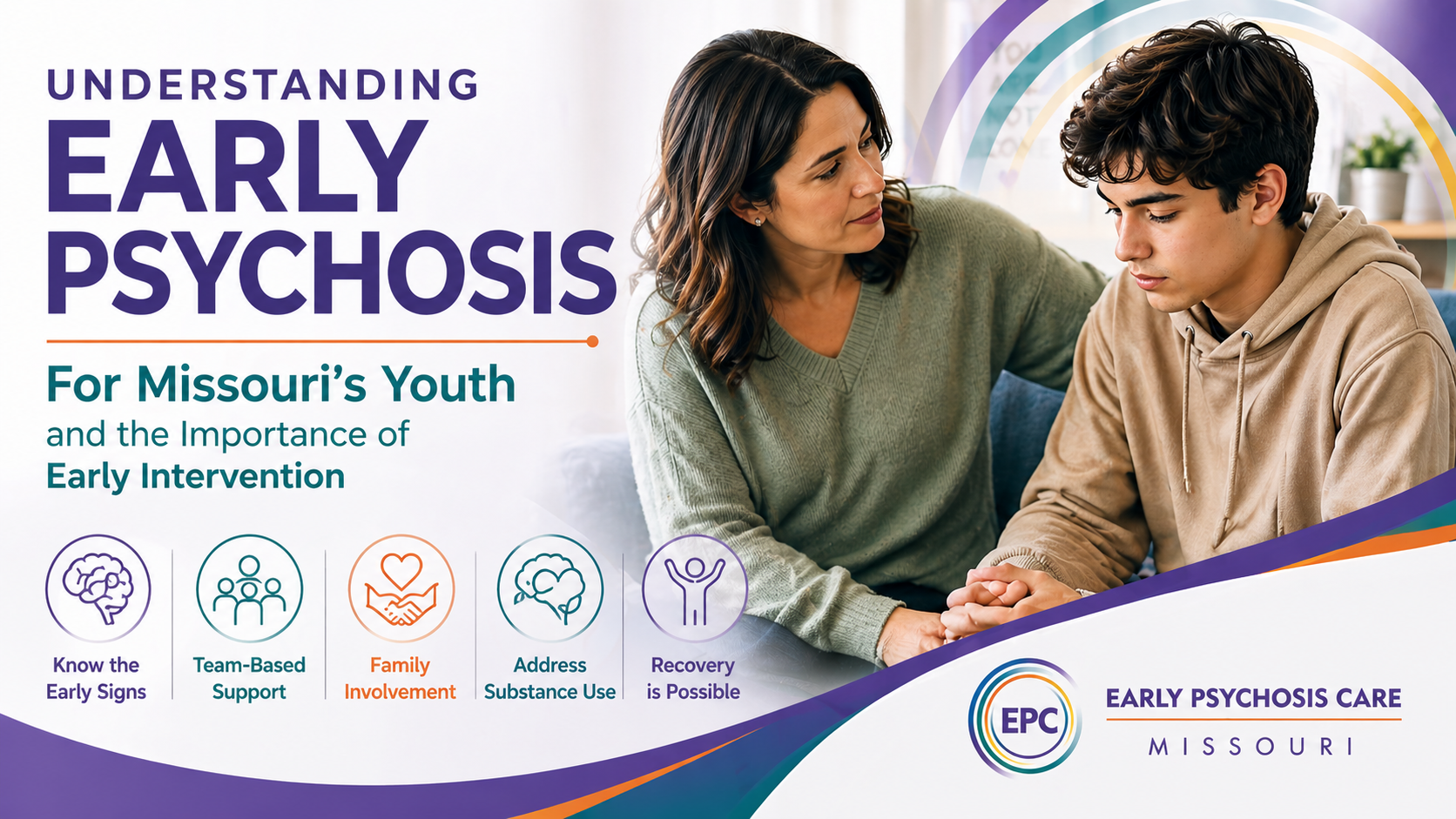
Early psychosis can significantly impact a young person’s life, but with the right support and early intervention, recovery is not only possible, it is expected.
For families, understanding what early psychosis looks like and how to respond can make a meaningful difference in long-term outcomes.
What Is Early Psychosis?
Early psychosis refers to the period when an individual first begins to experience symptoms such as unusual thoughts, perceptions, or behaviors. This stage often occurs during adolescence or early adulthood, a critical time when individuals are building their identity, education, and future.
These early experiences may feel confusing or distressing, both for the individual and for those around them.
Why Early Intervention Matters
The earlier psychosis is identified and treated, the better the outcome. Early intervention can:
- Reduce the severity of symptoms
- Improve recovery and long-term stability
- Help individuals stay connected to school, work, and relationships
- Lower the risk of long-term challenges
In some cases, individuals who receive early support may even experience minimal symptoms later in life.
What Are the Early Warning Signs?
The early signs of psychosis can vary, but they often include:
- Changes in thinking or perception
- Difficulty concentrating or communicating
- Withdrawal from social activities
- Shifts in mood or behavior
Because these signs can overlap with common challenges during adolescence, it’s important to look for patterns or changes that feel unusual or persistent.
What Is Coordinated Specialty Care?
Coordinated specialty care is an evidence-based approach designed to support individuals experiencing early psychosis through a team-based model.
This approach brings together different types of support, including:
- Medical care and medication management
- Therapy focused on coping skills and resilience
- Support for education and employment
- Peer support from individuals with lived experience
- Family education and involvement
Rather than focusing on one aspect of care, this model supports the whole person and their environment.
The Role of Substance Use
Substance use, particularly cannabis, can play a significant role in early psychosis.
Research shows that cannabis use during adolescence and early adulthood can increase the risk of developing psychosis. For individuals already experiencing symptoms, continued use may:
- Worsen symptoms
- Increase the likelihood of hospitalization
- Reduce the effectiveness of treatment
- Impact overall recovery
Because of this, understanding and addressing substance use is an important part of early intervention.
How Families Can Start the Conversation
Talking about mental health or substance use can be challenging, especially if emotions are involved. A supportive approach can make a big difference.
Instead of being confrontational, families can:
- Start with curiosity and understanding
- Ask open-ended questions about experiences and behaviors
- Listen without judgment
- Share observations with care and respect
For example, asking what someone finds helpful about a behavior, and then gently exploring any challenges it may cause, can open a more productive and honest conversation.
Supporting Motivation for Change
Change is most effective when it comes from within. Helping someone reflect on their own goals can strengthen their motivation.
Families can support this by asking questions like:
- What matters most to you right now?
- What do you want your future to look like?
- How do your current habits support or get in the way of those goals?
When individuals can connect their choices to their personal goals, they are more likely to take meaningful steps toward change.
Recovery Is Possible
One of the most important things to remember is that recovery is achievable.
With early support and the right resources, individuals experiencing early psychosis can:
- Continue their education
- Build relationships
- Pursue meaningful careers
- Live independently and with purpose
Early intervention helps create a path forward, allowing individuals to regain confidence and build the life they want.
Moving Forward
Early psychosis can feel overwhelming, but families are not alone. With awareness, timely support, and a strong care system, recovery becomes a realistic and hopeful journey.
Understanding the signs, having open conversations, and seeking help early can make all the difference.