
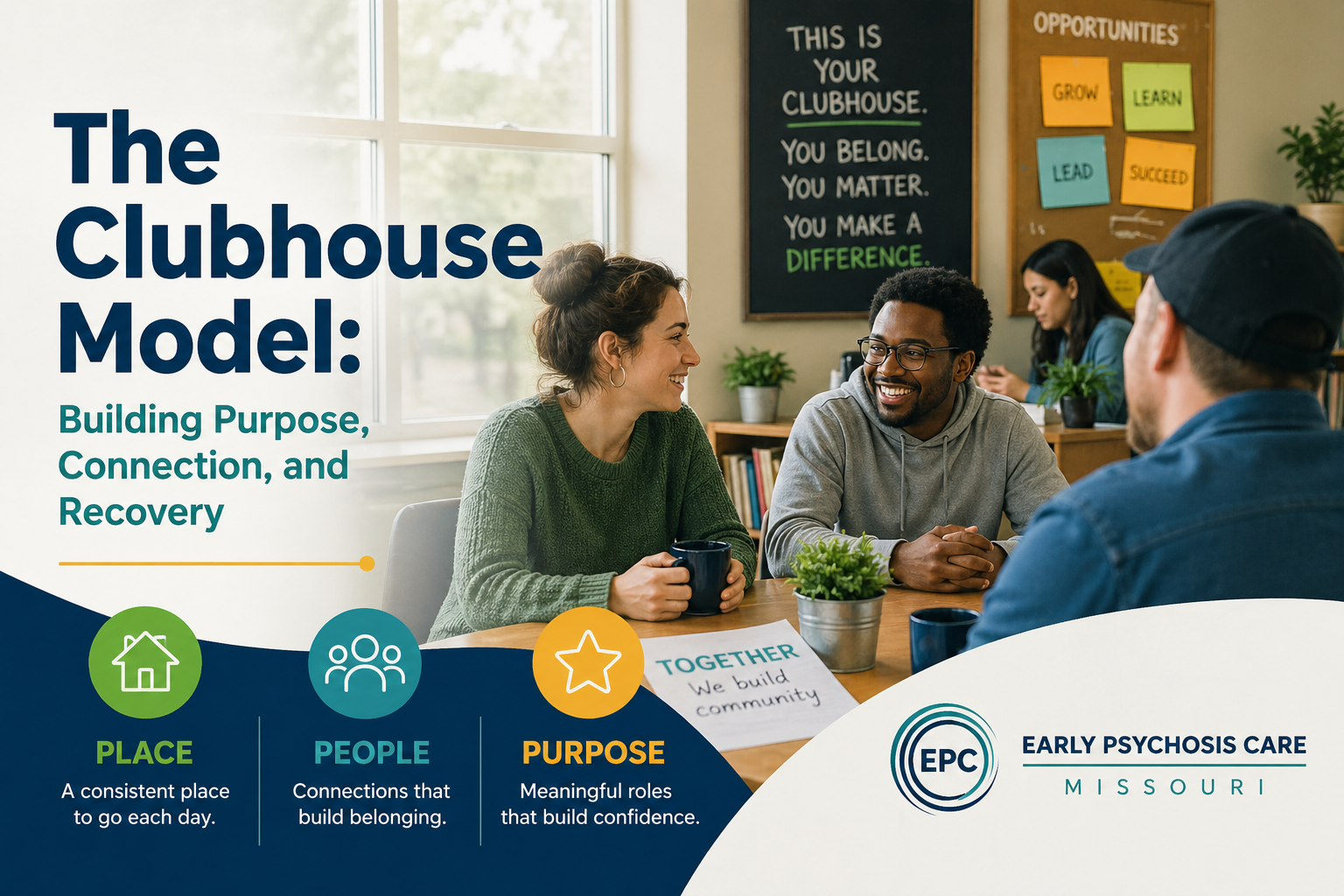
When someone experiences early psychosis, treatment is critical, but recovery doesn’t stop at stabilization. Through EPC Missouri, individuals across Missouri are gaining access to coordinated specialty care that helps reduce symptoms and begin healing. But long-term recovery is about more than clinical support. It’s about rebuilding confidence, restoring purpose, and finding a place to belong. One powerful way this happens is through the Clubhouse model.
The Clubhouse model is an evidence-based approach to mental health recovery that focuses on community, connection, and meaningful participation. At Independence Center in St. Louis, this model has been supporting individuals since 1981. Originally founded by families who wanted better support for their loved ones leaving state hospitals, the Clubhouse was designed to meet a simple but essential need: people need more than treatment – they need purpose and community.
In a Clubhouse, individuals are not referred to as patients or clients – they are members. This distinction matters. Members work side by side with staff to run the daily operations of the Clubhouse, creating an environment built on dignity, respect, and shared responsibility. It’s a place where individuals are needed, wanted, and expected, which can be incredibly meaningful for someone rebuilding their life after a mental health challenge.
At the core of the Clubhouse model are what many describe as the “three P’s”: place, people, and purpose. Members have a consistent place to go each day, offering structure and stability. They are surrounded by people who care about them and who they can build relationships with. And they are given purpose through meaningful roles – whether that’s helping with administrative tasks, supporting daily operations, or contributing in other ways that match their strengths. Even small responsibilities can have a big impact. Showing up, being counted on, and contributing to a shared community helps rebuild confidence and self-worth.
The Clubhouse model works hand-in-hand with early psychosis care by supporting individuals beyond symptom management. While coordinated specialty care focuses on treatment, therapy, and clinical support, the Clubhouse provides a real-world environment where individuals can practice skills, build relationships, and reconnect with their goals. This combination helps bridge the gap between stabilization and true recovery.
Employment and education are also key parts of the Clubhouse approach. Many individuals who experience early psychosis are at a stage in life where they are pursuing school, careers, or independence. After a disruptive diagnosis, returning to those goals can feel overwhelming. Clubhouse programs often use supported employment models to help members explore career paths, build resumes, practice interviews, and succeed on the job. With ongoing support, individuals can regain confidence and begin to see a future that still includes their ambitions.
Recovery looks different for everyone, but the Clubhouse model helps make one thing clear: a diagnosis does not define a person’s potential. Thriving means more than the absence of symptoms—it means reconnecting with life. It means building relationships, achieving personal goals, and finding a sense of belonging in a community.
Through initiatives like EPC Missouri, Missouri is helping individuals access both the clinical care and community support they need to move forward. The Clubhouse model is a vital part of that journey, offering not just a place to go, but a place to grow.